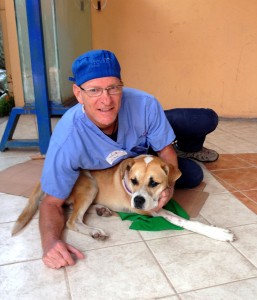
Dr. Joe Zulty in recovery with Puma after his leg amputation. World Vets Cusco, Peru project 2012.
It begins in the stone streets of Cusco, an ancient city of 600 thousand people, constructed by the Incas in the magnificent Andes mountains at 3,400 meters above sea level. There are many dogs in the streets, in doorways, everywhere. Unlike those of the U.S., these dogs are very talented. They know how to negotiate the streets, to stop at corners, and incredible how to avoid traffic.
Well, maybe not all of them.
On day two of World Vets spay/neuter clinic, three members of the Peruvian National Police, dressed in green uniforms, appearing strict and emotionless, delivered two dogs that had been running the streets. Both were discovered with 2 other dogs, all four belonging to a woman who loved them but unfortunately was not capable of providing for them. The older of the
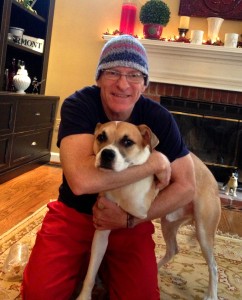
Dr. Joe Zulty with Puma following World Vets project in Maryland, USA.
two was scruffy but OK, the younger one however needed our help. He had a paw that was completely paralyzed and severely swollen. Its appearance was that of the paw of the Puma in the ancient wall of the Saqsayhuaman ruins. And there was something else worth mentioning. Perhaps another sign from the Incas, I am not sure. It is that moment in time that captures your heart and gives a true relevance to why we do what we do.
One of the police officers, a woman who was especially very quiet and very reserved, spoke not with words but with the hardly noticeable tears in her eyes. Those wet eyes touched me, made their way to my heart, and reinforced what the Incas were trying to tell me.
So the next day, on the last day of clinic, with the help of local Peruvian veterinarian, Dr. Carmen Caceres, the paw that touched but did not feel the surface of the street, was removed. Incredibly this dog, just 2 hours after surgery, was awake, standing, and wagging his tail! That was when one of World Vets volunteers stated, “It is not too difficult to take a dog back to the U.S. We brought a dog back from Ecuador on a past World Vets project.”
With the assistance of Monica Chacon of Pataz Pro Animalista Cusco, officer Glenda Anchea Garavito, Dr. Edgar Ochoa and his colleagues at Lazzie Vet Clinic, and the spiritual support of the Incas, the process of transporting a dog from one hemisphere to another became a reality. The forces were too strong. It was meant to be I suppose. In the airport in Cusco, my son Zack and I , with our new pet Puma, said goodbye to our friends from Cusco and of course the conversation was full of tears. But special moments like this do not come often. I was proud to be a veterinarian. I was proud of having worked with people who make a difference in the life of an animal. And I am pretty sure the ancient Incas were smiling from above.
**This article was written by Dr. Joe Zulty, a World Vets field service veterinarian. This article reflects his participation on World Vets Cusco, Peru project in 2012 when Puma was assisted and then adopted. Dr. Zulty is leading a World Vets small animal project to Sosua, Dominican Republic in November 2013. Read more about this volunteer opportunity here.
World Vets has an upcoming volunteer opportunity to Cusco, Peru operating September 28 – October 5, 2013. Volunteer positions remain open for the tech/student category. This position can be filled by licensed vet techs, non-licensed vet techs, vet students, pre-vet students and vet tech students. Read more about this volunteer opportunity here


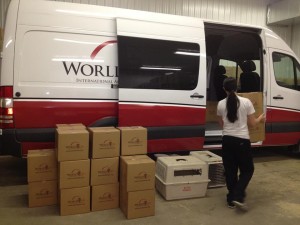 In response to the tornado that hit Oklahoma this month, World Vets teamed up with the American Animal Hospital Association (AAHA) and BlogPaws to help animals impacted by the disaster.
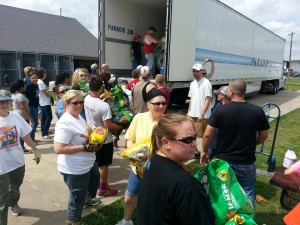 supplies that were delivered as part of a shipment organized by local Fargo, North Dakota TV station Valley News Live. These donated supplies were set up next to the “Reunion Facility” for owners that had been recently reunited with their pets to “shop” for food, crates, toys and more.
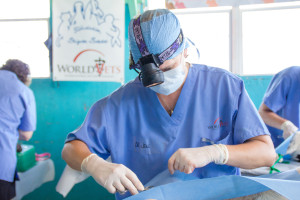 Volunteer veterinarians are still needed for two small animal projects that are scheduled to take place this summer in
 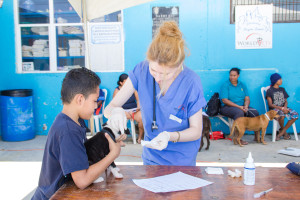 providing sterilization surgeries for cats and dogs, medical diagnosis and treatment, health consultations, and may be involved in performing other surgeries, teaching and/or instruction to students and/or local volunteers or pet owners.
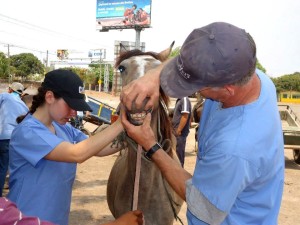 World Vets recently deployed a volunteer veterinary team to Granada, Nicaragua as part of our equine welfare project in the area. Our team, along with Nicaraguan veterinarians and students, held a free equine welfare clinic in and around the city which benefited 300 horses.
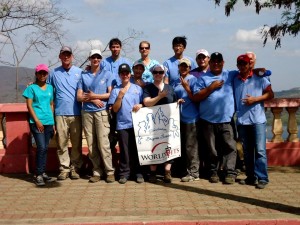 removals and more!
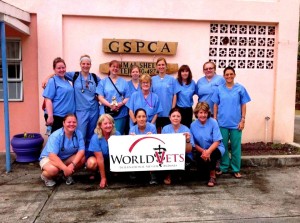 In April World Vets sent an all female volunteer veterinary team to St. George’s, Grenada. There they worked in collaboration with the Grenada SPCA as well as students from St. George’s University. Together we provided a large scale spay/neuter and animal health campaign which resulted in animals from all over the island benefiting from our free services. We’d like to thank World Vets veterinary volunteers as well as GSPCA and St. George’s University for all of their support in making our visit and campaign a reality.
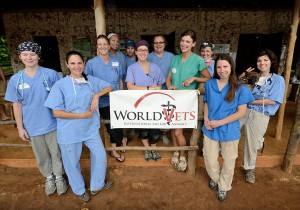
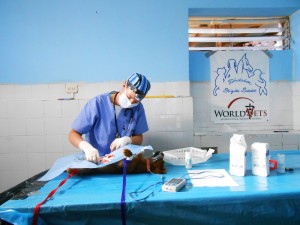 World Vets strives to work in partnership with foreign animal welfare groups, veterinary professionals, local and national governments and NGO’s as well as their respective agencies responsible for animal welfare, agriculture and public health. Throughout the year World Vets sends volunteer veterinary teams, who work in collaboration with many of these entities, to provide free veterinary services to animals in need. More specifically, we provide skilled teams of veterinary professionals to execute large scale community and/or island wide veterinary care.
 If you would like to request that a World Vets team visit your area in the coming year to provide free veterinary services, please send an email to
  There is just 1 TECH/STUDENT position left open for our June 2013 pilot project to Paramaribo, Suriname, located in South America.
 technicians as well as pre – veterinary students, veterinary students and veterinary technology students. To learn more about the anticipated activities and tasks under this category, see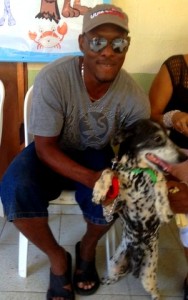
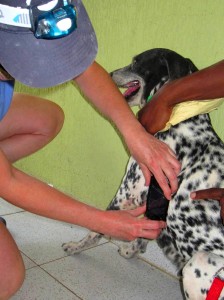
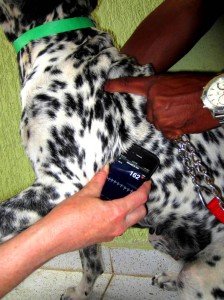 “Pecas”, a 13 year old female dog, arrived at our most recent spay/neuter and animal outreach clinic held last month in San Andres Island. Overall she was in good shape and generally well looked after. However, over her lifetime she had had countless litters and was still cycling in her old age. For fear that she would accidentally become pregnant again, her owner wanted to have “Pecas” spayed. While this was not an uncommon scenario, what made this case especially unique was that “Pecas” had recently been diagnosed heartworm positive by a local veterinarian. She was also discovered to have a fast heart rate and murmur. It was claimed that because of this condition she would not likely survive the surgery.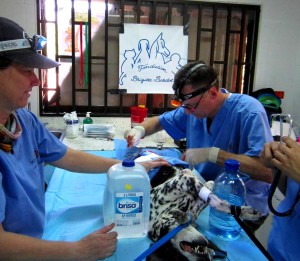
 During the whole month of March, World Vets operated its I
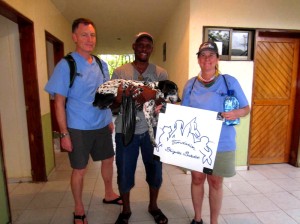
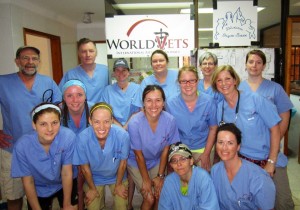 During Semana Santa (Holy Week), World Vets had a veterinary team on the Caribbean Island of San Andres Island. We provided a large scale spay/neuter clinic and also attended health consultations. All services were provided free of charge. The island currently lacks regular veterinary services for small animals and our clinic, in collaboration with the island’s department of health, saw up to 300 animals and performed 198 surgeries in just a couple of days.