Grant Beginnings
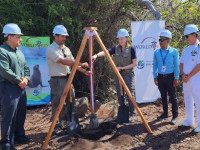
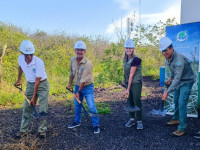
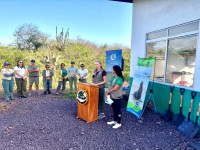
On November 30, 2023, the SeaWorld Conservation Fund announced a multi-year grant to help World Vets build the largest capacity for marine animal rescue on San Cristobal Island in the Galápagos, in collaboration with the Galápagos National Park. The funds will improve the infrastructure of the existing small facility used for wildlife response, build additional capacity for responding to and rescuing sick, injured, and entangled marine animals and other wildlife of the Galápagos Islands, and enable the study and baseline health monitoring of native species. Priority species will primarily be marine mammals, especially Galápagos sea lions and will also include Galápagos fur seals, dolphins, whales, sea turtles, Galápagos penguins, marine iguanas, and other native and endemic wildlife of the archipelago. The Galápagos has many species of animals not found anywhere else in the world and is a United Nations World Heritage Site protected by an international convention administered by the United Nations Educational, Scientific and Cultural Organization.
“We are very grateful to the SeaWorld Conservation Fund for their support which will help us fill a critical need in the Galapagos Islands, providing long-term and foundational capacity building and consistent veterinary support for marine species and other wildlife,” said Dr. Cathy King, Founder and CEO of World Vets and a conservation medicine veterinarian. “The many endangered and threatened wildlife species of the archipelago need our help as they face significant threats from climate change, introduced species, plastics pollution, and interactions with a growing human population. With this funding and our collaboration with the Galápagos National Park, we can have an even greater positive impact on the conservation of marine life.”
Specific project goals and objectives that will be made possible by the funding include:
- Facility upgrades for expanded veterinary services and short-term hospitalization, treatment, clinical care and field response. The grant will also make it possible to provide full-time veterinary staffing and 24×7 field responder coverage and availability.
- Improved data collection, identification, and recovery of animals. A new data collection app will be developed for use by field responders, veterinarians, park rangers and naturalist guides to facilitate and improve reporting and documentation. Public outreach to improve the identification and reporting of animals in distress, as well as routine beach surveys and drone surveys to spot and remotely evaluate animals in need will be included.
- Documenting and monitoring health trends, unusual mortality events and disease outbreaks. The funds will help facilitate more routine post-mortem examinations and to disseminate information on outcomes and any emerging health and disease trends.
Dr. Chris Dold, President of the SeaWorld Conservation Fund and Chief Zoological Officer of SeaWorld said, “At SeaWorld, we believe that marine animal rescue is a key tool for the conservation of marine species, and we are proud to help World Vets develop the added capacity they need to expand their important work. The rescue and rehabilitation of all species, both those living in abundant numbers and those deemed vulnerable or threatened, gives us and other marine health practitioners invaluable information about wildlife health and the diseases and threats present in the ocean. Marine mammals are sentinels for the health of the ocean and by caring for them we improve our ability to protect and preserve animals and their ocean environment today and into the future.”
All work will be done in collaboration with and under the direction of the Galápagos National Park. The Galápagos Islands are located on the equator, 600 miles off the coast of Ecuador. The Islands are a UNESCO World Heritage Site, an area legally protected by an international convention administered by the United Nations Educational, Scientific and Cultural Organization.
The public can help support funding of projects like this one by making a SeaWorld Conservation Fund donation online or in the SeaWorld parks. Since inception in 2003, the SeaWorld Conservation Fund has provided more than $20 million in grants to provide financial and scientific support to 1,391 different animal conservation and ecosystem projects on all seven continents.
One of two major focus areas for the World Vets program in Galápagos is developing the capacity for rescue, response, and veterinary services for sick, injured, entangled and dead marine animals and other native wildlife, especially in cases of human interaction. Efforts also contribute to research and conservation efforts for native wildlife species, especially the endangered Galápagos sea lions which are a primary focus.
World Vets was established over 20 years ago (with NGO status in 2006) as an international veterinary aid organization, bringing veterinary expertise, capacity building and direct care for animals to underserved areas of the world. Since then, World Vets has worked extensively in over 50 countries on 6 continents, has responded to major international disasters, has deployed numerous veterinary teams on US military humanitarian aid missions aboard US Navy hospital ships, has provided care that has benefitted over a million animals and has provided training in surgery and anesthesia techniques to over 1100 veterinarians from developing countries.
World Vets has an established presence in the Galápagos Islands and extensive experience in international development, marine mammal stranding response, rapid program implementation in challenging locations and over two decades of successful veterinary aid work in developing regions, especially Latin American countries.
About the SeaWorld Conservation Fund
Established in 2003, the SeaWorld Conservation Fund is a 501(c)(3) non-profit private foundation that supports grassroots conservation projects that make a difference in species research, habitat protection, conservation education, and animal rescue and rehabilitation. More than 100 different species have been helped through these grants. Funding comes through a variety of sources including contributions by SeaWorld’s corporate entity, SeaWorld Entertainment, and from the parks via roundups at the register, merchandise sales, and special events. Corporate partners contribute to the Fund, and consumers can support the cause by making donations in the parks or online. SeaWorld Entertainment, Inc. covers all expenses and overhead for the Fund. This enables it to return 100 percent of every penny donated directly to the projects supported. Grant applications are accepted annually, though 2022-2023 grant applications are by invitation only. Both one-time and multi-year support is provided for recipient organizations.


2023-2026 Progression
A SeaWorld and World Vets Partnership
Over the past three years, the SeaWorld Conservation Fund has invested in an ambitious vision: to help World Vets build a comprehensive wildlife rescue and veterinary response program on San Cristobal in the Galápagos Islands. Today, that vision has become a fully operational, locally based program providing 24/7 wildlife response, veterinary care, health monitoring, and conservation support on the island.
With SeaWorld support, World Vets built the infrastructure, team, equipment, systems, and technical capacity needed to respond rapidly to wildlife emergencies—while working in collaboration with and under the direction of the Galápagos National Park Directorate. The partnership has created a strong foundation for wildlife protection in one of the world’s most unique and fragile ecosystems.
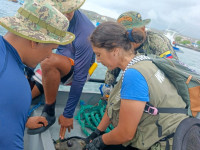
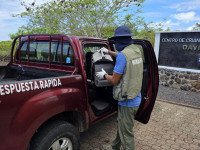
Over the three-year grant period, World Vets managed more than 1,400 wildlife cases, responding to animals that were sick, injured, entangled, stranded, orphaned, or deceased. The dedicated team is available 24 hours a day, 7 days a week, and can mobilize in approximately three minutes after receiving an emergency call.
Building the Foundation for Wildlife Rescue
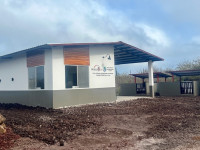
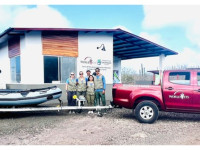
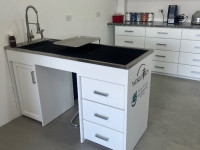
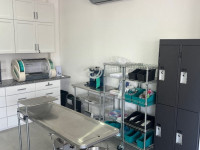
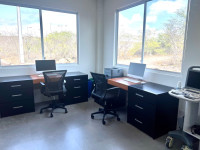
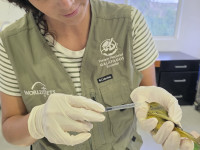
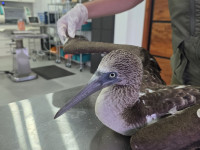
One of the most important accomplishments of the SeaWorld Conservation Fund grant was the development and opening of San Cristóbal Island’s first Wildlife Rescue Center. The facility provides World Vets with the capacity to perform diagnostics, treatment, surgery, anesthesia, monitoring, and short-term hospitalization for wildlife in need.
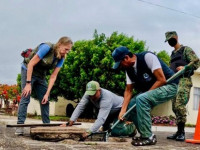
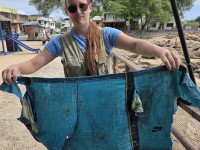
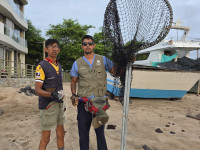
SeaWorld Conservation Fund support also helped World Vets establish the essential infrastructure for field response, including a dedicated wildlife response truck, boat trailer (for the previously purchased Zodiac boat), veterinary and rescue equipment, medications, nets, protective gear, and diagnostic and surgical equipment. Together, these resources have dramatically expanded the team’s ability to reach and care for wildlife in challenging environments.
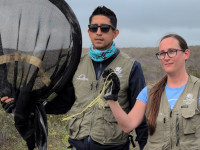
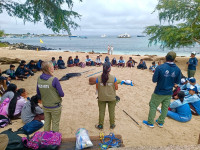
Just as importantly, the grant invested in local people and expertise. World Vets established a dedicated veterinary and technical team, with local Galápagos professionals playing an important role in the program. Training, workshops, and hands-on experience strengthened local capacity to safely handle marine mammals and other wildlife and to provide increasingly sophisticated veterinary care.
Rapid Response for All Types of Wildlife
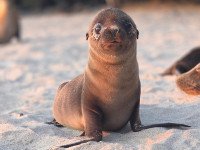
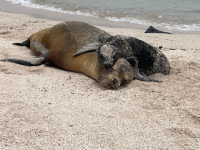
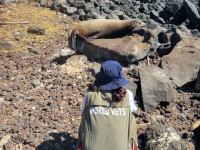
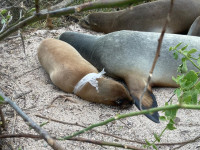
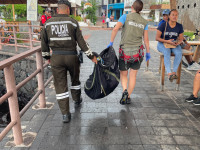
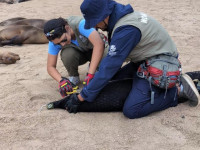
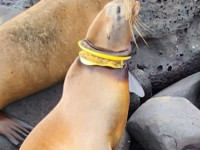
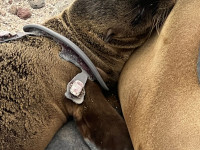
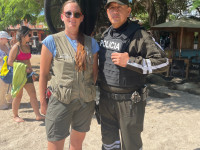
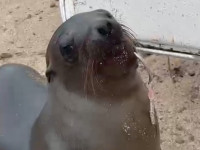
Galápagos sea lions have been at the heart of the program. During the grant period, sea lions have represented around 75% of wildlife response calls, with over 1100 sea lion cases documented. Almost one-quarter have involved entanglements in ropes, fishing lines, straps, plastic, clothing, and other marine debris. Often working alongside Galápagos National Park Rangers or the Environmental Police (UPMA), the World Vets team has been able to safely capture, disentangle, and release these affected animals.
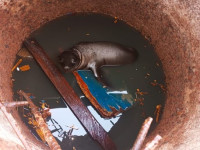
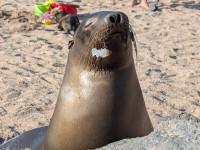
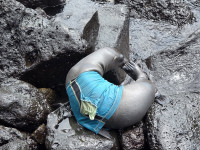
The team has also responded to more unusual emergencies—from a sea lion trapped in a volcanic rock crevice to another with an eel up its nostril, to various animals found in roadways, businesses, docks, and other unsafe locations. Interventions reduce risks to both wildlife and people while allowing animals to return to appropriate habitat.
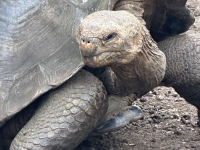
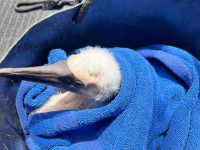
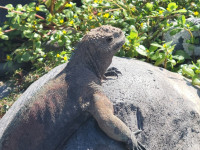
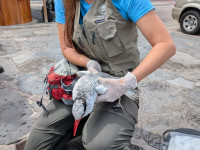
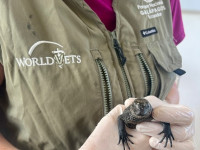
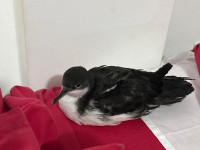
The program has grown into a comprehensive wildlife response service. Throughout the grant period, World Vets has conducted health examinations of giant tortoises, responded to hundreds of avian cases, and handled over a hundred calls for marine and land iguanas, sea turtles, snakes, fish, dolphins, and other native wildlife.
Conservation Data and Wildlife Health Surveillance
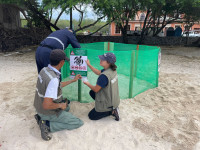
Another major accomplishment of the three-year grant was building World Vets’ capacity to turn individual wildlife responses into valuable conservation and health information. World Vets implemented a digital wildlife reporting system, allowing cases to be documented consistently and shared through monthly reports with the Galápagos National Park Directorate. The program also expanded beach surveys, wildlife monitoring, and drone use to improve the detection and documentation of stranded and injured animals.
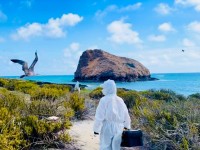
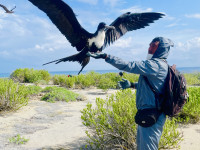
At the same time, the program established stronger capacity for wildlife health surveillance and post-mortem investigations. World Vets developed the staffing, equipment, protocols, and facility capacity needed to conduct necropsies and investigate wildlife mortality events. This included a significant investigation of Franklin’s gulls found dead or paralyzed on the same beach, as well as seven months of avian influenza surveillance conducted with the Biosecurity Agency of Galápagos and Galápagos National Park Rangers.
Together, these efforts created a stronger foundation for evidence-based conservation in the Galápagos. Wildlife response data, health assessments, necropsy findings, disease surveillance, and field monitoring now provide valuable information that can help identify emerging threats, track wildlife health, and inform long-term conservation and management decisions.
Building a Program That Will Last
The greatest accomplishment of World Vets through the SeaWorld Conservation Fund grant is not simply the number of animals rescued—it is the lasting capacity that has been created. This three-year investment has fundamentally changed what is possible for wildlife rescue on San Cristóbal Island.
SeaWorld provided the critical investment. World Vets has built and operates the program. The Galápagos National Park provides the essential conservation partnership and oversight. Together, they have created a model for rapid wildlife response, veterinary care, and conservation that will continue serving Galápagos wildlife long after the grant period has ended.
World Vets extends its deepest gratitude to the SeaWorld Conservation Fund for making this transformational work possible. Its investment provided the foundation for a program that is now relied upon by the local community and the Galápagos National Park—and that is helping protect the wildlife and ecosystems that make the Galápagos extraordinary.